Blog

Hello again, avocados!

June 17th, 2013

Summertime means lazy afternoons, sunshine, swimming and the start of Florida organic avocado season at Uncle Matt’s Organic. While avocados are also grown in California and Hawaii, the first Florida avocado crops were planted in the antebellum era of the 1830s by horticulturist Henry Perrine. Avocados didn’t become a commercial crop until the early 1900s. In the 1950s, after gaining popularity as a salad item, demand for the fruit grew. Yes, fruit. Widely considered a vegetable, the avocado is actually a fruit that has become a favorite of foodies everywhere!

Did you know that there are more than 50 different varieties of Florida avocados, but that only about a dozen of those are sold commercially? Running from late June through December, Uncle Matt’s will offer organic Donnie, Simmonds, Nesbitt, Beta, Tonnage, Black Prince, Hall and Monroe varieties — grown by our very own second-generation avocado grower, Murray Bass, in Homestead, Florida.

Uncle Matt’s Florida organic avocados are “green-skin,” which means they’re larger than the popular Hass variety but have less fat and fewer calories. Which brings us to this important point: Don’t avoid the avocado because you think it’s too fattening! It’s a creamy, delicious superfood that powers your body with an array of healthy fats and nutrients –– like oleic acid, lutein, folate, vitamin E, monounsaturated fats and glutathione, just to name a few. These powerful nutrients help protect your body against cancer, heart disease, and degenerative eye and brain diseases. What’s more, they’re also a healthy source of dietary fiber, potassium, and vitamins B6 and C.

We love our avocados because they’re definitely good for whipping up our favorite summertime guacamole. But our fruit’s mild flavor lends itself to the creative and unexpected. Try a half avocado in a fruit smoothie, or add some slices to your sandwich instead of lettuce.  If you’re really looking for some culinary trendsetting ideas, wow the guests at your next dinner party with this colorful Avocado, Beet and Grapefruit Salad and top it off with yummy sure-fire favorite chocolate cupcakes…only the secret’s in the icing. Avocado icing, that is. Trust us, it’s amazing!

Easy on the Wallet: Money-Saving Ideas for Buying Organic

June 10th, 2013

Buying organic has never been more popular. Yet, you probably hear as we do, this one gripe about organic foods: they sometimes cost more than non-organic foods. Although we at Uncle Matt’s truly believe that safe, healthy nutrition and the vigorous health it creates are priceless, we also know how important it is to stretch those family dollars as far as possible.

Fortunately, there are simple ways to make buying organic more budget-friendly. Here are some tips to get you started.

Watch the grocery store flyers. Watch for specials on organic foods. Grocery stores know organic products are more popular, so they will run specials on them to attract shoppers. Make it a regular habit to check the flyers for specials on organic foods.

Expand your grocery store network. It’s easy to get attached to one grocery store, but by expanding where you shop, you can take advantage of more selection and better prices. Don’t automatically assume only the upscale or specialty grocery stores carry organic products. You can now find organic at big, small, discount, specialty and buying clubs. Check them all out!

Practice smart shopper sleuthing. No need to hop in the car and drive all over town in search of organics. Check specials on a grocery store web site. Or use a site like www.eatwellguide.org to help you find inventory and prices at several local stores. Other sites for saving money on organic products include EcoBonus, Mambo Sprouts, Organic DealsStockpiling Moms, Coupon Divas’ Organic Coupons, and Money Saving Mom.

Join forces with a friend. Enlist a couple of friends who are also committed to finding, buying and serving organic foods to their families. Then instead of shopping individually, take turns shopping for organics. You can pool coupons and discounts, share ideas and knowledge, take advantage of bulk buying programs, save gas, AND have some fun in the process.

Think and eat local.  Small organic farms might have a roadside stand or sell at a farmer’s market. Make it a Saturday tradition to head to the fruit stand or farmer’s market with the kids. They’ll get to see all kinds of foods and get to know local farmers, all while subconsciously learning the importance of being proactive in selecting the safest, more nutritious foods. And you’ll likely save some money while shopping there.

Stock your freezer. While shopping farmer’s markets, buy fresh organic produce in bulk. Then freeze packages of strawberries, green peppers, or whatever else you’ll have a craving for later in the year. Read up on which kinds of produce freeze well – or talk to the grower about how to freeze items. And don’t forget the frozen food section of your grocery store. You can find all kinds of organic products that can save your some serious cash.

Although organic foods may cost a little more on the front end, remember that good health is ALWAYS less expensive than disease. So take these tips to save some money, knowing that you are investing in your and your family’s well-being.

Eating clean: Three tips for avoiding chemicals in your food

May 30th, 2013

It seems like food is getting the blame as the cause of many illnesses and sickness these days. Although we have some of the best health and nutrition education in the world, we’re still addressing significant issues surrounding the American diet. To combat obesity, illness and other diseases, the USDA recommended in 2010 that Americans should fill “half the plate with fruits and veggies” at each meal. Yet, some of us find ourselves second-guessing what’s supposed to be a healthy no-brainer. Maybe it’s due to the fact that much of the U.S. fruit and vegetable supply has been sprayed with pesticides and chemicals that carry long-term health risks.

According to the Environmental Working Group (EWG), many scientists and public health advocates believe that a number of increasingly common problems that afflict children, including autism, ADHD, low birth weight, early delivery, asthma, infertility, diabetes and cancer, are linked to exposure to toxic chemicals and pesticides.

A recent study published by the Environmental Health Journal reports that cancer benchmark levels were exceeded by all children tested – 100% – for toxic exposure to arsenic, dieldrin, DDE, and dioxins. Based on the self-reported dietary data, the greatest exposure to pesticides from foods included in this analysis were tomatoes, peaches, apples, peppers, grapes, lettuce, broccoli, strawberries, spinach, pears, green beans, celery and dairy.  What’s more, the study showed that pre-school age children had significantly higher estimated intakes of 6 of 11 compounds compared to school-age children.

So what are we to do when what we put on our family’s dinner plate is about as simple as navigating a minefield? We’re offering you  three dietary tips that greatly reduce your family’s exposure to chemicals in your food and will help you make informed food choices:

1. Choose organic for all your dairy, fresh fruit and veggies.

It’s an easy rule of thumb: if you’re eating the skin or peel of it, buy it organic. It’s that simple. This advice applies to many of the foods on the “Dirty Dozen: Foods You Should Always Buy Organic List,” including: apples, berries, peaches, tomatoes, grapes, squash, cucumbers, green beans, spinach and lettuce. Since the nutrient density of these foods is so high, why taint the health benefits by choosing ones sprayed with chemicals? Also, when it comes to dairy, what goes into the cow shows up in the milk. So, by choosing organic, you can rest assured that “organic cows” used for milking were fed a diet of grains and grasses that were grown without the use of synthetic fertilizers, herbicides or pesticides.

2. Consume less meat, dairy and fish.

The most Persistent Organic Pollutants (POPs) are found in meat, dairy and fish. POPs are organic (carbon-based) chemicals — products and by-products of human industrial processes — that do not break down, either chemically or biologically, in the environment. They are persistent, meaning that they can be found in the environment for decades and even centuries.

Not only do POPs remain in the environment, they also have a tendency to accumulate in the fatty tissue of animals and humans and have been found in human breast tissue, fish, meat, and dairy products worldwide.

Exposure to POPs has been linked to many health problems, including birth defects, immune system disorders, reproductive health disorders, endocrine and nervous system abnormalities, and cancers. (Source: Healthy Child, Healthy World).

If you don’t want to eliminate these foods altogether, then remove the fat and skin as much as possible when you eat meat and fish since this is where the POPs concentrate. Also, avoid farmed salmon, as it tends to have some of the highest levels of POPs.

3. Lower your intake of processed carbohydrates.

Put away the potato chips. Throw out the cookies. You’ve heard it before: avoid high-carbohydrate processed foods. But do you know why? One partial reason is because those foods have a higher probability of containing “acrylamide.” According to the World Health Organization, “acrylamide is a chemical that is used to make polyacrylamide materials, as well as glues, paper and cosmetics. Acrylamide is also used in the construction of dam foundations and tunnels, and appears to be produced in some foods prepared at high temperatures. Acrylamide is known to cause cancer in animals. Also, certain doses of acrylamide are toxic to the nervous system of both animals and humans.”

So, that begs the question: why is a chemical that is used in construction of dam foundations and tunnels in our food?  The answer is that appears to be produced naturally in some foods that have been cooked or processed at high temperature and the levels appear to increase with the duration of heating. The highest levels found so far were in starchy foods (potato and cereal products).

(Source: http://www.who.int/foodsafety/publications/chem/acrylamide_faqs/en/)

A Day in the Life of an Organic Citrus Grower

April 18th, 2013

Groves, Growing, and What I Hope to Leave My Grandchildren

By Benny McLean

What’s it like to be an organic citrus grower? We sat down with Benny McLean, production manager at Uncle Matt’s Organic and Uncle Matt’s father, to find out. Benny has been a part of the citrus industry for almost 50 years, and has been an organic citrus grower for nearly a decade and a half.  Here’s what this farmer had to say about life in the groves…

photo credit: McLean Photography

A GROWER’S MORNING ROUTINE

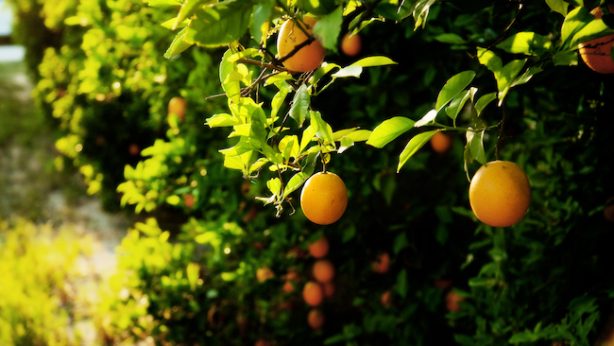
I live in a citrus grove and I have grapefruit trees planted there. When I leave my house in the morning, I always drive through my favorite grapefruit grove.  I’ll look at the trees and ask myself questions like, “Do I have a good bloom?” “Do I have leaf drop?” “Do I see any bugs in there that could cause a problem?” It’s a daily habit for me, like getting up in the morning and eating breakfast. And the answers are out there: in the grove. All I have to do is ride the grove and the grove will tell me if there’s a problem. My dad used to say that the rising sun has the highest amount of beneficial rays for anything that grows in the soil, so if you’re going to find a problem, you’ll find it then.

FERTILIZING, FUNGUS, AND FLYERS

As an organic grower, I don’t use synthetic pesticides or fertilizers in our farm program, so observation becomes that much more important. For example, if a grove is in need of fertilizer, it will tell you by the color of the leaf.  I look for discoloration in the old flush [leaves] and discoloration in the new flush. When a tree is off-color, it might be because the trees are running low on potassium or nitrogen. Under that scenario, I’ll pull leaf samples to be analyzed and compare the lab results with what I observe. Weather patterns and leaf analysis will determine when to apply our organic fertilizer program.

In springtime, my day will also include assessing the fungus situation in the grove and its effect on the trees and fruit. At this time of year, we’re mainly concerned with Scab, Alternaria, and Melanose.  While harmless, these three conditions can prove unsightly and can knock our fruit out of grade at the packing house.  In order to boost revenue from a grove, you need a high pack-out per acre. If we find these conditions in our groves, we’ll apply organic fungicides, like beneficial bacteria, to help remedy the situation.

Pests don’t really become a problem for us until May or June.  We do have a little pest called a “rust mite.” It’s very small, but it will put a scar on the peel that will cause the graders down at the packing house to reject it. It has nothing to do with the flavor or nutritional quality of the fruit, but the rust mite scars the fruit’s appearance.

WEEDS GOING WILD

During the summer months, rain patterns in Florida really help things grow –– including weeds.  We get a lot of questions from other growers about how we control weeds since we don’t use synthetic herbicides. Honestly, we don’t obsess over weeds.  Granted, we don’t want them growing too close to the irrigation microjet emitters, so in all our groves, we’ll use weed-eaters and in-and-out mowers for weed control, as well as good, old-fashioned hand labor.  Growing up, harvesting labor crews would have come in with hoes, and saws, and clippers and they’d cut the vines and hoe up the bad weeds and all of that. They’d work through the hot, Florida summer. Yet, some of today’s farmers don’t even know what a hoe is. Their only reaction is to spray weeds with herbicides.

My father always told me you have to look at it two ways. He said if you got an orange tree growing in your yard and you have beautiful St. Augustine grass growing under the orange tree, you could say, “Oh my, that orange tree is getting all the fertilizer and water from my beautiful grass, so I’ve got to do something about that orange tree.” The next guy comes by and says, “Oh my, that grass is taking all the fertilizer and water away from the orange tree. I’ve got to do something about that grass.” My dad would say, “You know what? They’re compatible. They exist with each other. They get along.” The exception would be what we call a “reset,” such as a small one-year old tree. It’s then that the weeds are a major problem. But a mature tree actually produces shade that doesn’t allow for weeds to grow well under its canopy anyway.

FRUIT PICKIN’ TIME

In late fall, when harvest is right around the corner, I begin to look for signs of fruit maturity. There are state-mandated maturity guidelines for harvesting based on minimum levels of brix [fruit sugar], juice, and ratio. Until the fruit meets all three of these criteria, we can’t pick it. Every variety has its own standards. After meeting the maturity levels, we’ll look at size because there are minimum size requirements as well. So, you’ll find us out in the groves with our calipers measuring fruit size as harvest time (November through May for various varieties), gets closer.

What’s funny is that it’s the buyer who decides what the right size is. The fruit falls into five different categories, with one being too small and the other, too large. So, it’s the middle three sizes that a buyer typically wants. The homemaker doesn’t have a choice when going to the supermarket. When I give grove tours, many women will see some of my biggest grapefruit and ask why they can’t buy that in the store. Well, now you know!

BEING A DIE-HARD ORGANIC FARMER

At the end of the day, I love growing organically. I have eleven beautiful grandkids and I know I am creating something worthwhile for their longtime health if they are going to eat citrus.  I believe I am educating them on how to read the label, so to speak. They can make intelligent food choices based on the knowledge of how a food was grown, how it was processed and how it was stored. I know what it is to be a conventional farmer, and I know the difference eating organic can make in your health. As long as I have a choice, I’ll never go back with all that I’ve learned and observed over the past 14 years of being an organic farmer. I believe that organic is the better choice.

A Quick Q&A with “Papaw” McLean

UM: What’s your favorite citrus variety?

Papaw: Ruby Red Grapefruit

UM: What’s your favorite tractor?

Papaw: A big green one with citrus implements

UM: How do you like your grapefruit eaten?

Papaw: “Sectionized.”

UM: Favorite breakfast?

Papaw: Fresh organic grapefruit from my grove, 4 ounces of cottage cheese, and a handful of raw organic almonds

UM: What legacy do you want to leave your grandkids?

Papaw: I want them to understand that it’s the three L’s. #1: You got to love life. #2 You’ve got to love the land. #3 You’ve got to love the Lord. And if you can understand those three principles, you’ll carry this legacy onto the next generation.

UM: In your opinion, what’s the best reason for someone to try organic for the first time?

Papaw: I know that organic is a healthier source of citrus juice –– orange, tangerine, grapefruit. I know that it has a higher antioxidant level than any of the other juices. If you’re going to drink orange juice because it’s healthy, then choose the healthiest one.

“Why I’m PRO ‘NO-GMO’” | An Open Letter from Uncle Matt

April 15th, 2013

Dear Friends,

As an Uncle Matt’s supporter, you know the importance of eating food that is high in nutrition and free from the residual effects of synthetic pesticides and fertilizers often used in today’s conventional growing practices.

But there is an issue you may not know about that deeply affects the U.S. food supply and has far-reaching global implications: GMOs. A genetically modified organism (GMO) is an organism whose genetic material has been altered using genetic engineering techniques.

What’s all the talk about? Simply put, GMOs combine genes in crops from unrelated organisms that could not have otherwise have mixed through biological reproduction and/or conventional breeding. For instance, a frog gene could be inserted into a tomato plant to allow the tomato plant to grow faster.  Common crops that have been modified include wheat, soy and corn. Ultimately, the goal is to increase crop yields by creating GMO plants more resistant to pests and disease.

While farming with GMOs might increase yields over the short term, “Round-Up Ready” crops (as they are dubbed) utilizing the chemical “glyphosate,” a weed killer, have spawned a growing concern for human health. Why? Because not enough research exists on what the long-term risks from GMOs are when examining our environment and human health.

As an organic farmer, I’m concerned with answering questions like, “Does the human body respond to GMOs as food or as foreign substances?” If the body responds to the genetic modification as something “foreign,” it won’t break it down and nourish the body as it should. In fact, the body may actually have a negative autoimmune response. Additionally, what are implications for pregnant women, babies and children who consume GMO foods? Is there a correlation between GMO-food consumption and the spike in food allergies, autism, and ADHD that we see today?

As we grapple over these alarming questions regarding human health, unanswered questions surrounding the impact of GM crops on animal and environmental health remain: What are the ramifications of GM-engineered animal feed given to livestock? Or what about the potential contamination of GM crops on non-GM varieties via open pollination? One grain grower told me about his concern for “trespassing pollen” on his property with organic acreage.

So while the topic can appear daunting, here are 2 important steps you can take today to make a difference ­­–– not only for the safety of your family but also for your community and your state.

1.  SUPPORT LABELING.

Aside from banning GMOs, which I would be in favor of until ramifications for human, animal, and environmental health were fully understood, the easiest short-term action that allows for consumer choice is food labeling. Consumers would then know whether or not they were consuming GMOs and the marketplace would decide whether or not they want to be a part of the GMO experiment.

The national ‘Just-Label-It’ campaign is lobbying Washington D.C. to introduce a law that would require labeling of all GMO foods. Visit www.justlabelit.org to learn about the 8 steps you can take to promote labeling. And while Prop 37, which would have required GMO labeling in California, was defeated last November, there are currently 14 states with similar bills being considered.

If you are more favorable to letting the marketplace decide, Whole Foods recently announced that any products sold in its U.S. and Canadian stories that contain genetically modified ingredients must be labeled by 2018.

2. CHOOSE ORGANIC WHEN POSSIBLE.

Consuming organic foods is one sure-fire way to avoid GMOs.  Not only are organic foods produced without the use of synthetic pesticides, they are also produced without genetically-modified organisms. GMOs and GM seeds are strictly prohibited in the production of organically-grown foods. For example, certified organic corn flakes will not be produced with GMO corn. Organic soymilk uses only non-gmo soy.

In the end, your dollar is your vote and voice, not only for you, but for your family as well. By voting for organic, you are voting for a much cleaner method for producing food that is healthy for you, your family and the planet. And by choosing an all-organic diet, you’ll never have to worry about consuming GMOs again.

Healthy regards,

Matt

Matt McLean is the founder and CEO of Uncle Matt’s Organic, a family-owned business located in Clermont, Florida, specializing in fresh organic juices and fresh produce. He also has served on the Organic Trade Association Board for the past 8 years, the last two as President.

Green Up Your Routine in Just 4 Weeks with Easy Eco-Tips for On the Go Families

March 28th, 2013

We know life is hectic for your family. Between running errands, baseball practice, PTO meetings and school car lines, it’s easy to forget how our everyday choices impact the environment and increase the carbon footprint we leave behind. Surprisingly, with just a few easy-to-implement tweaks to your weekly schedule, you can “green” your everyday routine and get on the road to sustainable living… in just 4 weeks! Here’s how:

WEEK 1: Lose the plastic water bottles.

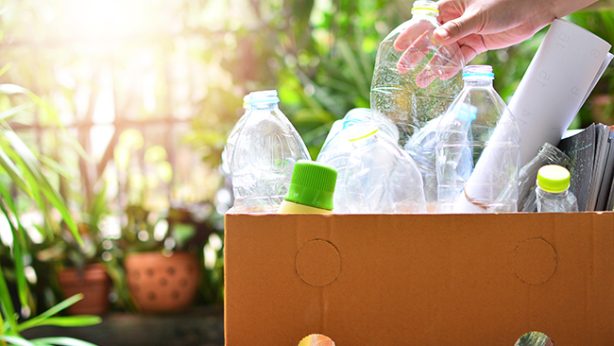
Got 90 seconds? That’s how fast and easy it is to lose the plastic! Here’s our 2 step plan: First, make a one-time investment in Klean Kanteens for the whole family. A safe alternative to plastic and aluminum-lined bottles, these stainless steel beverage holders are strong, durable, shatterproof and BPA-free. Not only will you recoup your initial investment quickly, you’ll reduce the amount your family recycles and lessen the chance that one of those bottles will end up in a landfill. Second, try using a water-filter, such as a Brita filter, for improved water quality and purity. Put together, you’ve got a plan for staying hydrated that’s not only healthier for you,but healthier for the environment.

WEEK 2: Pack a Lunch Bento-Style.

Talk about waste! From juice boxes, disposable napkins, plastic sandwich baggies, snack wrappers…the list goes on and on. With bento-style lunchboxes, say hello to a waste-free lunchtime Take ‘Bento Buddy’ from LapTop Lunches, for example. You’ll get USA made, BPA-phthalate-and-PVC-free food containers  that are recycled and recyclable, and easy-to-clean. And if you’re concerned about portion control, food allergies, or nutrient content, you can take those off your mental plate (no pun intended), because Bentos put you in the driver’s seat with portable, various-sized refillable containers that are leak-free and keep food fresh. What’s more, LapTop lunches also offers cloth napkins in coordinating colors. We’re talking a totally waste-free lunch.

WEEK 3:  Try a Travel Alternative.

So while it might be tempting to buy a hybrid, we all know that might not be in the cards for this week. But when is the last time you really looked at your weekly travel trip and asked some conscience questions like: Could we carpool? Could we walk or bike? Is there public transportation available? One step in susainability’s direction can significantly reduce your family’s weekly carbon footprint and dependence on limited resources like fossil fuels.

WEEK 4: Tote Your Groceries (And other stuff, too).

Never have to answer the “Would you like paper or plastic?” question again. Bring your reusable tote bags made of recycled materials to the grocery store, and join the new en vogue trend. Keep two or three handy by returning them to the side pockets of your car doors or store them in the trunk. This way, they’re already in the car every time you make a stop. And who says they’re just for groceries? Next time you go clothes shopping, be a sustainable trendsetter and take home your new duds in your favorite reusable tote! Check out Green Girl World for some fun and fashionable designs.

So, go ahead! Take our four-week challenge and implement our super-easy tips one week at a time. With just a small investment of time and resources, you’ll find you’re making big strides in greening up your family’s routine. They’re changes that are healthy for your family and show you care about the earth your kids grow up in, as well.

DurhamontheCheap blog reviews Uncle Matt’s!

March 26th, 2013

Through the Green Moms Meet program from Kiwi Magazine, DurhamontheCheap blog reviewed Uncle Matt’s products. Read her review here!

Another Reason to Eat Organic

March 19th, 2013

Just when you thought science was saying organic food has no nutritional value, another study from the University of Granada has found a direct correlation between exposure to pesticides and the risk of type 2 diabetes in adults.

Published in the Journal of Environmental Research, researchers found that people who had higher concentrations of DDE (which is the main metabolite in pesticide DDT) also were more likely to develop diabetes – four times as likely, in fact.

Furthermore, higher exposure to a compound in the pesticide Lindano (beta-Hexachlorocyclohexane) was also linked to higher risk of type 2 diabetes.

Results took into consideration the age, gender, and body mass index of 386 adults surveyed. The findings, however, could help explain body fat’s link with type 2 diabetes. Researcher Juan Pedro Arrebola notes that “human adipose tissue (commonly known as ‘fat’)… can store potentially harmful substances, such as persistent organic pollutants (COPs).”

The direct effect of pesticides on type 2 diabetes is still unknown, although researchers suggest that these compounds can affect the metabolism of sugars. Still, it might be another reason to splurge on organic food. A study from Stanford University found that 38 percent of non-organic food had pesticide residue, compared to 7 percent of organic produce.

Source: Organic.org

Woman of Many Roles blog reviews Uncle Matt’s!

February 28th, 2013

The Woman of Many Roles blog just reviewed Uncle Matt’s and loved it. Read her review here. Thanks, Woman of Many Roles!

Live, Laugh, Love Blog loves Uncle Matt’s!

February 13th, 2013

An excerpt from the blog review:

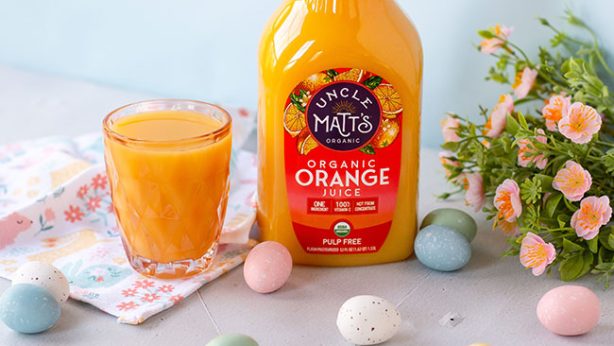
I was sent a “free coupon” to try one of Uncle Matt’s Organic‘s [products and] I choose Orange Juice. We are a big fan of OJ in our household. My son and I love it although my husband loves lots of pulp in his, but me nope I don’t like it that way. I love the vitamin d & calcium.

I like how it says not from concentrate I always look for OJ that says that on the carton. I love organic even though it can be pricey we try to budget our money with getting organic sometimes I like that it’s healthier for you. I went to my local Shoprite they have an organic section now, and I only saw OJ & Grapefruit. I really wanted to try the Lemonade thought that might taste good too, but they were out of it. I also got a cooler bag too along with my review. I love it!

Read the full review here.